
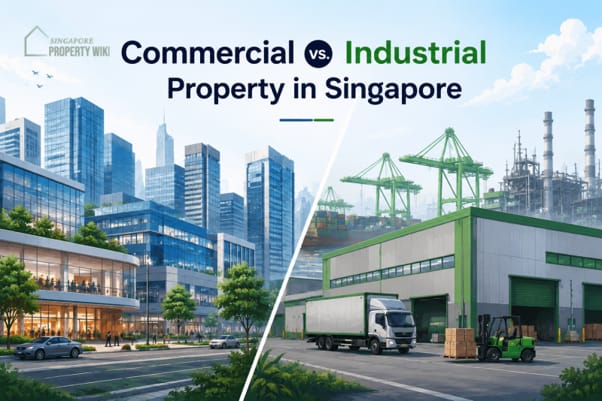
Singapore's Property Market: Commercial vs. Industrial Spaces
Singapore’s real estate market is a fascinating and multifaceted arena, offering a wealth of opportunities for investors, entrepreneurs, and business owners. In this vibrant market, commercial and industrial properties stand out as two distinct sectors, each with its own unique characteristics and investment prospects. Our journey here is to unravel these differences, offering clarity and insight into a market that is as dynamic as the city itself.
The Singapore property landscape is renowned for its robustness and strategic importance in the region. It’s a market characterized by high-quality infrastructure, strict regulatory oversight, and a strong appeal to both local and international investors. Within this framework, commercial properties – encompassing everything from sleek office spaces to bustling retail outlets – cater to businesses seeking customer interaction and brand visibility. Meanwhile, industrial properties, which include factories, warehouses, and logistics centres, serve as the backbone for manufacturing and distribution operations.
Why is it important to understand the distinction between these two types of properties? Simply put, each category not only serves different business needs but also comes with its own set of rules, regulations, and market dynamics. For example, zoning laws, tax implications, and investment returns vary significantly between commercial and industrial real estate. This knowledge is crucial for anyone looking to navigate the Singapore property market effectively, be it for investment purposes or finding the right location for their business operations.
Property is often one of the most valuable assets a person owns, which is why understanding its value is so important. Whether you are planning to sell, buy, refinance, or simply keep track of your property portfolio, having a clear understanding of how property value is determined can help you make more informed decisions.
Many homeowners assume that property value is based solely on location. While location remains an important consideration, it is only one part of a much larger picture. Factors such as property condition, accessibility, tenure, market demand, and nearby amenities can all influence how a property is valued.
In Singapore’s property market, valuations are used for a variety of purposes, ranging from financing and taxation to investment planning and property transactions. Understanding what drives property value can help homeowners, buyers, and investors navigate the market with greater confidence.
Defining Commercial and Industrial Properties
In Singapore’s dynamic real estate market, understanding the distinction between commercial and industrial properties is crucial. These terms are not just different in vocabulary but represent diverse aspects of real estate, each with unique characteristics and regulations.
Commercial Property: The Face of Business Interactions
Commercial properties are designed for business activities that engage directly with consumers or provide professional environments. They’re the spaces where commerce thrives and business interactions happen. This category includes:
- Retail Spaces: From small boutique shops to large department stores, these are the front line of consumer engagement.
- Offices: These spaces are the nerve centres for corporate activities, housing everything from startups to multinational corporations.
- Malls: As mixed-use spaces, malls combine retail, dining, and entertainment, creating a comprehensive consumer experience.
These properties are often located in accessible areas, bustling with consumer activity. The design and location are focused on attracting foot traffic and facilitating easy access for clients and customers.
Industrial Property: The Backbone of Operations
Industrial properties, contrastingly, are less about direct consumer interaction and more about production, storage, and logistics. They are essential for the smooth operation of the economy’s backend. This category includes:
- Factories: These are the production and assembly hubs, where raw materials are transformed into finished products.
- Warehouses: Critical for storage and distribution, warehouses manage the holding and handling of goods.
- Logistics Centers: These facilities oversee the movement of goods from production to market, ensuring efficient supply chain management.
Such properties are typically situated in zones designated for manufacturing and logistics, often located away from residential areas to mitigate disruption and adhere to safety regulations.
Legal Distinctions in Singapore
The legal framework in Singapore clearly demarcates these property types. Commercial properties, due to their interaction with consumers, are subject to different zoning laws and regulations compared to industrial properties. These legal distinctions affect various factors like permissible business activities, property taxes, and modifications allowed on the premises. Understanding these legal aspects is fundamental for investors and business owners, as it impacts leasing terms, operational capabilities, and overall investment strategies.
In summary, the Singapore property market classifies commercial and industrial properties based on their intended use, location, and the legal framework governing them. Recognizing these differences helps in making informed decisions, whether for investment purposes or selecting the right location for specific business operations.
Regulatory Framework and Zoning Laws
Navigating the real estate market in Singapore calls for a clear understanding of the regulatory framework and zoning laws, particularly as they apply to commercial and industrial properties. The Urban Redevelopment Authority (URA) plays a pivotal role in shaping these guidelines, ensuring that property development aligns with Singapore’s broader urban planning objectives.
The Role of the Urban Redevelopment Authority
The URA is Singapore’s national land use planning and conservation authority. It’s responsible for the master planning and zoning of land to ensure optimal use, balancing economic growth with environmental sustainability and community needs. For property investors and owners, the URA’s guidelines serve as a roadmap for what can be developed, where, and how.
Zoning Laws for Commercial and Industrial Properties
Zoning laws are critical in defining the permissible uses of different parcels of land. In the context of commercial properties, these laws often designate areas within or close to residential zones, allowing easy public access. Such zones are ideal for retail shops, offices, and restaurants, aiming to integrate business and leisure seamlessly into the community fabric.
Industrial properties, conversely, are typically zoned away from residential areas. This zoning is due to the nature of industrial activities, which may involve heavy machinery, large-scale storage, and transportation of goods. These zones are carefully planned to minimize environmental impact and ensure safety standards are met. They’re often located strategically to provide easy access to transportation networks, facilitating efficient logistics and distribution processes.
Impact of URA Guidelines on Property Usage and Limitations
The URA’s regulations have a significant impact on how properties can be used and what limitations are imposed on development. For commercial properties, this might include restrictions on the size and height of buildings, the type of businesses that can operate, and specific requirements for accessibility and parking. For industrial properties, considerations include the type of manufacturing activities allowed, environmental safety measures, and limitations on building specifications to accommodate heavy machinery or hazardous materials.
Understanding these guidelines is crucial for anyone involved in the Singapore property market. It ensures that investments are not only financially sound but also compliant with national planning objectives. This awareness helps in avoiding potential legal issues and in planning long-term strategies that align with the evolving urban landscape of Singapore.