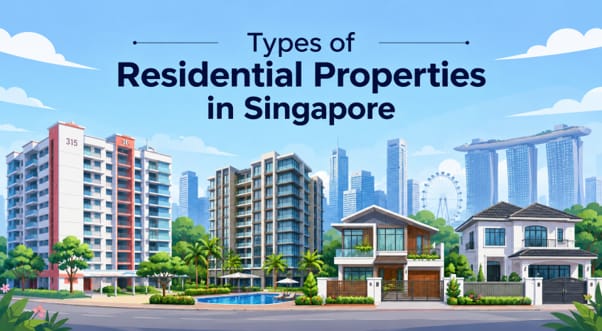
Introduction to the Different Types of Residential Properties in Singapore
Singapore offers a diverse range of residential property options designed to meet different lifestyles, budgets, and housing needs. Whether you are purchasing your first home, upgrading to a larger property, or exploring long-term investment opportunities, understanding the various residential property types can help you make a more informed decision.
Each property category comes with its own characteristics, benefits, and considerations. Some are designed to provide affordable housing, while others focus on lifestyle, exclusivity, or space. Buyers who understand these differences are often better positioned to choose a property that aligns with their current circumstances and plans.
In this guide, we explore the main types of residential properties available in Singapore. From HDB flats and executive condominiums to private apartments, condominiums, and landed homes, this overview will help you understand what each property type offers and who it may be most suitable for.
HDB Flats
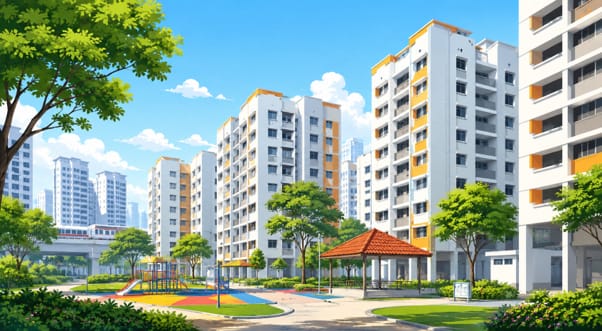
What Are HDB Flats?
HDB flats form the foundation of Singapore’s housing landscape and are home to the majority of the resident population. Developed and managed by the Housing & Development Board, these flats were created to provide affordable and quality housing for Singaporeans.
Over the years, HDB estates have evolved into well-planned communities with convenient access to schools, transport networks, healthcare facilities, shopping centres and recreational spaces. Modern HDB towns are designed to support everyday living while fostering strong community connections.
For many Singaporeans, an HDB flat is the starting point of their property journey and remains a practical housing option throughout different stages of life.
Common Types of HDB Flats
HDB offers several flat configurations to accommodate different household sizes and needs.
2-Room Flexi Flats are generally popular among singles and seniors seeking a compact and manageable living space.
3-Room Flats provide a comfortable option for smaller families or couples who prefer a modest home.
4-Room Flats are among the most common choices, offering a balance between affordability and living space.
5-Room Flats provide additional room for larger households and families requiring more flexibility.
Executive Flats are larger units available in selected older estates and appeal to families who value spacious interiors.
3Gen Flats are specifically designed to support multi-generational living, allowing extended families to live together more comfortably.
Who Are HDB Flats Suitable For?
HDB flats are suitable for a wide range of buyers due to their affordability and practicality.
First-time homeowners often find them accessible, while growing families appreciate the availability of larger unit types. Seniors may also benefit from housing options designed with ageing-in-place considerations.
For buyers prioritising convenience, community amenities, and value for money, HDB flats remain an attractive choice.
Executive Condominiums
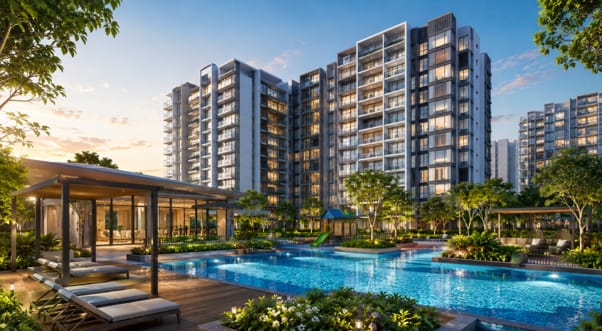
What Is an Executive Condominium?
Executive Condominiums, commonly known as ECs, occupy a unique position between public and private housing. They are developed by private developers but initially operate under certain eligibility conditions.
ECs were introduced to cater to households seeking a higher standard of housing without immediately entering the fully private residential market. They often provide many of the lifestyle features associated with private condominiums.
As a result, ECs have become a popular stepping stone for families looking to upgrade their living environment.
Key Features of ECs
One of the main attractions of ECs is access to facilities typically found in private developments. These may include swimming pools, gyms, function rooms, landscaped gardens, and security features.
Buyers must meet eligibility requirements when purchasing a new EC. In addition, owners are subject to a Minimum Occupation Period before the property can be sold under certain conditions.
Over time, ECs gradually become more similar to private residential properties, making them a distinctive housing category within Singapore’s property market.
Who Should Consider an EC?
Executive Condominiums are often attractive to middle-income households seeking upgraded living environments.
Families who desire condominium-style facilities but are mindful of budget considerations may find ECs particularly appealing. They can also serve as a natural progression for homeowners moving from HDB flats to more premium housing.
For eligible buyers, ECs often provide a balance between lifestyle benefits and affordability.
Private Condominiums and Apartments
Private Apartments
Private apartments are privately owned residential developments that generally offer a simpler living environment compared to larger condominium projects.
They may range from small boutique developments to larger apartment complexes. Some apartments provide limited shared facilities, while others focus primarily on residential living space.
Buyers who prefer a more straightforward property option may find private apartments suitable for their needs.
Private Condominiums
Private condominiums are among the most popular forms of private housing in Singapore. They are known for offering a range of lifestyle amenities and communal facilities.
Residents may enjoy access to swimming pools, fitness centres, barbecue areas, function rooms, playgrounds and landscaped grounds. Security features such as gated entrances and guardhouses are also commonly found.
These developments often appeal to buyers who value convenience, recreation and a resort-style living environment.
Condo vs Apartment
Although the terms are sometimes used interchangeably, there can be practical differences between apartments and condominiums.
Condominiums generally offer more extensive facilities and shared amenities, while apartments may focus more on the residential units themselves. Development size, maintenance costs, and lifestyle offerings can also vary.
Ultimately, the choice depends on personal preferences, budget, and desired living experience.
Landed Properties
Terrace Houses
Terrace houses consist of homes built in a continuous row, with neighbouring units sharing side walls.
They typically provide more living space than apartments or condominiums and often include outdoor areas such as patios, gardens, or car porches. Many families appreciate the combination of space and privacy they offer.
Terrace houses remain one of the more accessible forms of landed housing in Singapore.
Semi-Detached Houses
Semi-detached homes share one common wall with an adjoining property while maintaining greater privacy than terrace houses.
These homes usually sit on larger land plots and offer more flexibility for customisation and renovation. Families often favour semi-detached homes for the additional living space and enhanced privacy.
They provide a balance between exclusivity and practicality within the landed housing segment.
Detached Houses and Bungalows
Detached houses and bungalows are standalone properties that do not share walls with neighbouring homes.
They typically offer larger land areas, greater privacy, and more opportunities for customised designs. Owners may enjoy expansive indoor and outdoor spaces that accommodate a variety of lifestyle needs.
These homes are often associated with premium residential living due to their scarcity and space.
Good Class Bungalows (GCBs)
Good Class Bungalows represent one of Singapore’s most exclusive residential property categories.
Located within designated areas, these homes are known for their generous land sizes, privacy and prestige. Their limited supply contributes to their desirability among high-net-worth individuals.
GCBs are widely regarded as some of the most sought-after residential properties in Singapore.
Cluster Houses
Cluster houses combine aspects of landed living with the benefits of shared facilities.
Residents typically enjoy private living spaces while also having access to amenities such as swimming pools, gyms, and security features. This creates a lifestyle that blends the spaciousness of landed homes with the convenience of condominium living.
For buyers seeking a middle ground between the two, cluster housing can be an attractive option.
Special Residential Property Types
Conservation Shophouses
Conservation shophouses are valued for their architectural heritage and historical significance.
Many feature distinctive facades and design elements that reflect Singapore’s cultural history. Buyers are often drawn to their unique character and timeless appeal.
Owning a conservation property can offer a very different experience compared to modern residential developments.
HUDC and Former HUDC Estates
HUDC housing was originally developed to cater to middle-income families seeking larger homes.
Although new HUDC developments are no longer built, some former HUDC estates continue to exist today, with several having undergone privatisation. These properties often offer spacious layouts that remain attractive to certain buyers.
They represent an important chapter in Singapore’s housing development history.
Community Care Apartments
Community Care Apartments are designed to support seniors who wish to maintain an independent lifestyle while having access to care-related services.
These developments incorporate age-friendly features and are intended to support ageing residents within a safe and convenient environment.
As Singapore’s population ages, such housing options are becoming increasingly relevant.
How to Choose the Right Property Type
Budget
Your budget is often the starting point when evaluating residential property options.
Beyond the purchase price, it is important to consider financing commitments, maintenance expenses, renovation costs, and future financial goals. A realistic budget can help narrow down suitable property choices.
Choosing a property that fits comfortably within your financial plan can contribute to long-term stability.
Household Needs
Every household has unique space requirements and lifestyle priorities.
A young couple may prioritise affordability and convenience, while a growing family may require additional bedrooms and larger living areas. Understanding your current and future needs can help guide your decision.
The right property should support both your present circumstances and long-term plans.
Lifestyle Preferences
Some buyers prioritise access to facilities and community amenities, while others prefer privacy and larger living spaces.
Factors such as commuting convenience, recreational interests and desired neighbourhood characteristics can all influence the ideal property choice.
Understanding your lifestyle preferences can help you identify which property category best matches your expectations.
Long-Term Plans
Property decisions often have long-term implications.
Future family expansion, retirement goals, investment considerations and potential lifestyle changes should all be taken into account. Thinking ahead can help ensure your chosen property remains suitable for years to come.
A well-considered purchase often provides greater satisfaction and flexibility over time.
Quick Comparison of Residential Property Types
| Property Type | Best Suited For | Main Advantage |
|---|---|---|
| HDB Flats | First-time buyers and families | Affordability and accessibility |
| Executive Condominiums | Upgraders and middle-income households | Condo-style living with added value |
| Private Apartments | Buyers seeking private housing | Simplicity and flexibility |
| Private Condominiums | Lifestyle-focused homeowners | Extensive facilities and amenities |
| Landed Properties | Families seeking space and privacy | Larger living environments |
Conclusion
Singapore’s residential property market offers housing options for nearly every stage of life and every type of homeowner. From practical HDB flats and executive condominiums to private developments and prestigious landed homes, each category serves a distinct purpose within the housing landscape.
The best property is not necessarily the largest or most expensive. It is the one that aligns with your financial situation, household needs, lifestyle preferences, and future plans.
By understanding the characteristics of each residential property type, you can approach your property search with greater confidence and make decisions that support your long-term goals.